840 Customized 3D Printed Cement Pavilion

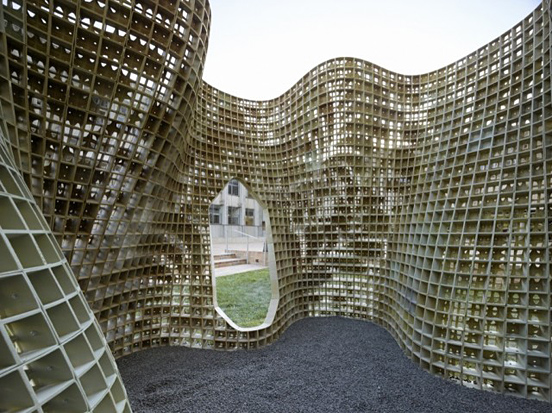
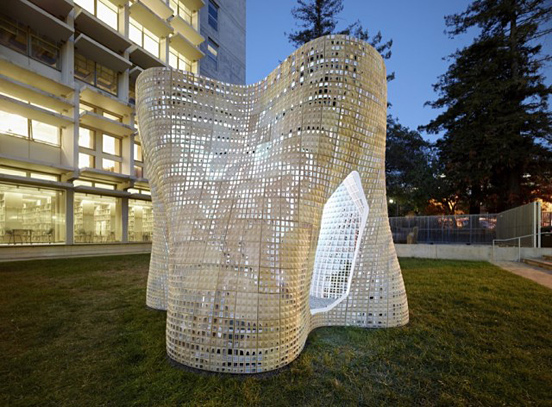
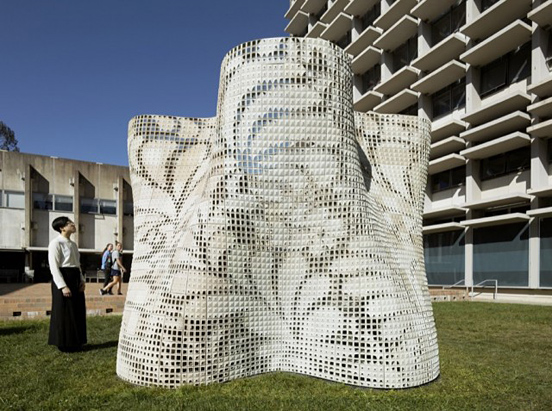
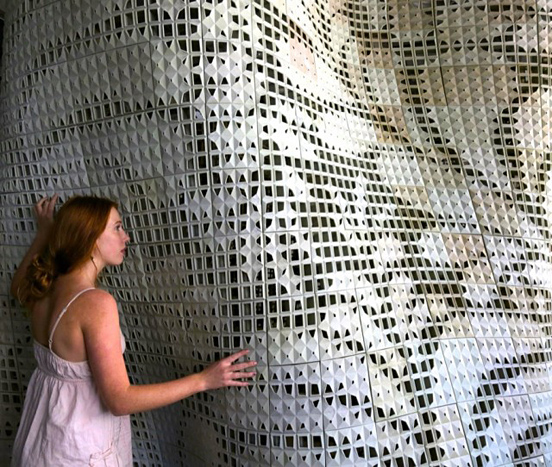
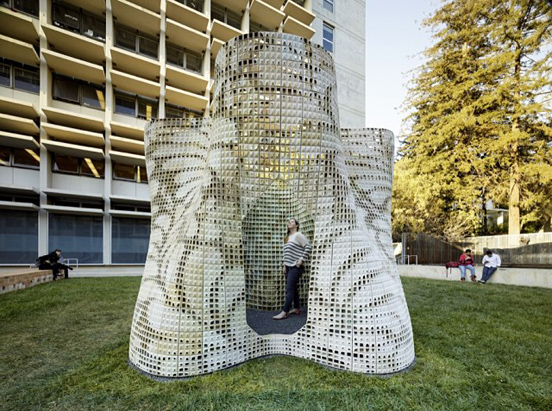
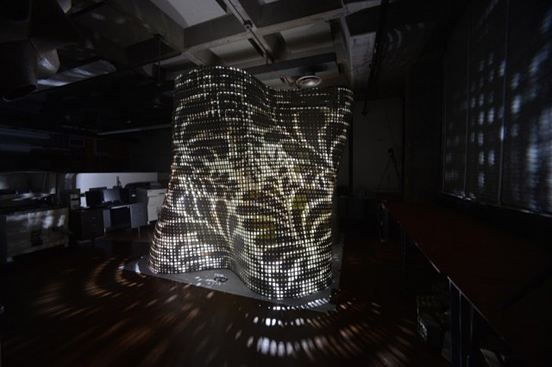
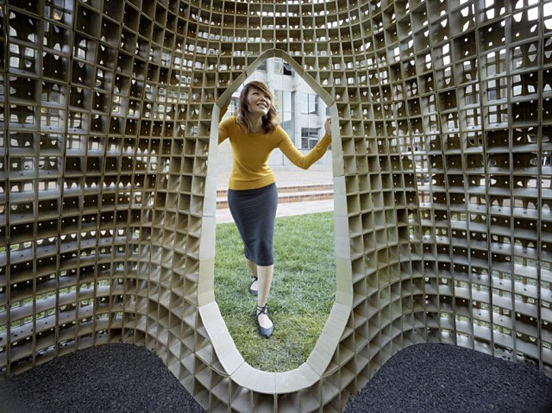
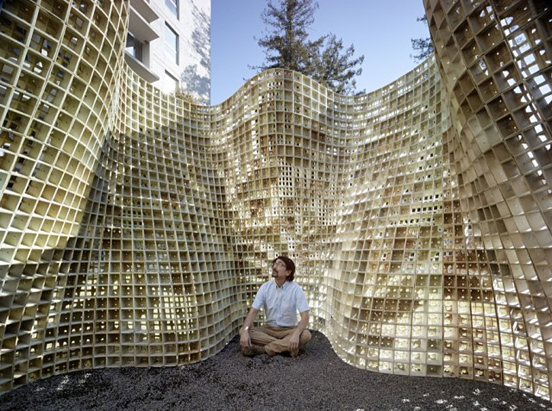
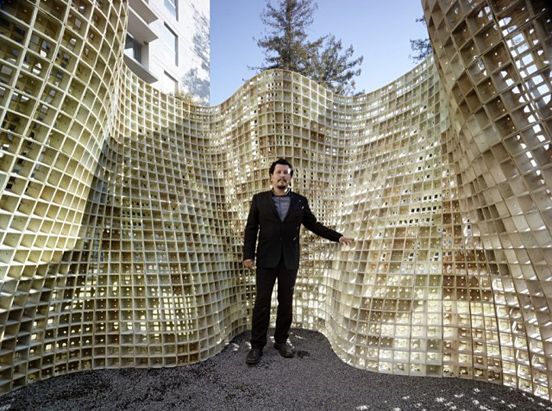
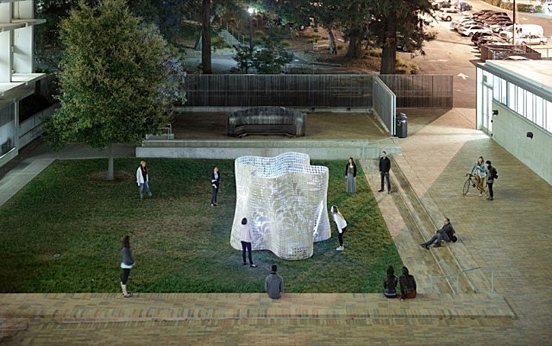
Bloom designed by Emerging Objects is a 9 foot tall freestanding tempietto with a footprint that measures approximately 12 feet by 12 feet and is composed of 840 customized 3D printed blocks. The experimental pavilion represents a new paradigm in building construction methods. A pattern derived from traditional Thai flower patterns is mapped onto the surface of the structure that creates a figural pattern and stunning visual effect of light, shade and shadow on the exterior and interior. From the exterior the pattern is most striking from a distance or when viewed through the screen of a digital camera, which creates a surprise upon photographing the structure from up close.

Each block is printed using a farm of 11 powder 3D printers with a special cement composite formulation comprised chiefly of iron oxide-free portland cement. Iron oxide imparts a gray color to cement, and its removal makes this print much lighter. Also, 3D printed cement requires no formwork and produces no waste and the support material can be reused to produce more blocks. Coupled with portland cement is an ecologically derived UV resistant polymer that reduces the greenhouse gas emissions from production of resins by 50% over conventional petroleum based epoxies that uses plant-based materials that do not compete with food sources or displace food-based agriculture. Each 3D printed block is enumerated to designate the blocks position in the overall structure. Rather than a set of blueprints, a spreadsheet that demonstrated the position of a block, was used in constructing Bloom, and each block is assembled and held in place using stainless steel hardware.
  • Todd Sumamno

    Todd is a seasoned writer and journalist with a passion for exploring the intersection of technology and design. With over a decade of experience in the industry, he has established himself as a trusted voice in the tech and design communities. Todd's writing career began in the early 2000s, when he started contributing to various online publications and blogs. He quickly gained a reputation for his ability to break down complex technical concepts into engaging and accessible language, making him a go-to writer for tech companies and startups looking to communicate their ideas to a wider audience. In recent years, Todd has focused on writing about the latest trends and innovations in the tech and design spaces. He has covered everything from artificial intelligence and machine learning to user experience (UX) design and human-computer interaction. His writing has appeared in a range of publications, including major tech websites, design magazines, and industry-specific journals. Todd's writing style is characterized by his ability to balance technical accuracy with engaging storytelling. He is known for his ability to distill complex ideas into clear and concise language, making him a favorite among readers who are looking for in-depth analysis and insight into the latest tech and design trends. When he's not writing, Todd can be found attending industry conferences and events, where he stays up-to-date on the latest developments in the tech and design worlds. He is also an avid user of new technologies and loves to experiment with new tools and platforms. Overall, Todd is a highly respected and experienced writer who is dedicated to helping readers understand the latest trends and innovations in the tech and design spaces. His writing is informative, engaging, and always insightful, making him a valuable resource for anyone looking to stay ahead of the curve in these rapidly evolving fields.

    Related Posts

    Why Modern Websites Are Becoming Complex Digital Systems (And What Businesses Get Wrong)

    Modern websites have evolved far beyond static marketing pages. What was once a relatively simple combination of design and content has now become a fully integrated digital system involving multiple…

    What Effective Web Design Looks Like in 5 Different Industries (And What Makes Them Work)

    A lot of designers treat every website the same way. Same grid, same hero layout, same CTA placement. It looks clean. But for most industries, it completely misses the point.…

    You Missed

    Why Modern Websites Are Becoming Complex Digital Systems (And What Businesses Get Wrong)

    What Effective Web Design Looks Like in 5 Different Industries (And What Makes Them Work)

    UX in Focus: Design Trends That Are Worth the Hype

    How to Restore Deleted Photos from SD Card or USB Drive?

    Designing a Story: How Your Packaging Reflects Your Brand

    Essential Design Tweaks to Make Any Template Stand Out