 Todd Sumamno
When it comes to networking, building connections, and promoting your business or personal brand, the business card has always been a useful tool to have available. But if one thing is clear, it’s that not all business cards are created equal. And in most cases, the gap between the best and worst business cards comes down to design choices and implementation.
Why Design a Business Card?
In an age of LinkedIn, websites, email, and SMS, it’s easy to feel as if business cards have gone the way of the dodo. However, if you talk to branding experts and successful entrepreneurs, they’ll be quick to inform you that business cards are still extremely useful, relevant, and impactful in the grand scheme of networking. Today’s best options even combine digital convenience with traditional formats, like a tech-enabled business card that allows tap-to-share functionality while still making a lasting physical impression. Here’s why:
- Business cards make a quick first impression. Even if the person loses the card or finds your contact information online, the fact that you’re prepared enough to hand out a business card shows thoughtfulness and attention to detail.
- Business cards make it easy to connect. If you tell someone to look you up on LinkedIn or write down your email address, the chances that they’ll follow through are slim. By handing them your card, you give them a physical reminder.
- Business cards make your business more referable. You can hand them out to friends and family who can then distribute them to their network whenever they feel like they may have a lead for you.
- Business cards are inexpensive. When compared to other forms of networking and direct marketing, business cards are cheap to produce. You can print them for pennies and never have to worry about ongoing costs or fees (like you do with many digital products).
4 Business Card Design Tips
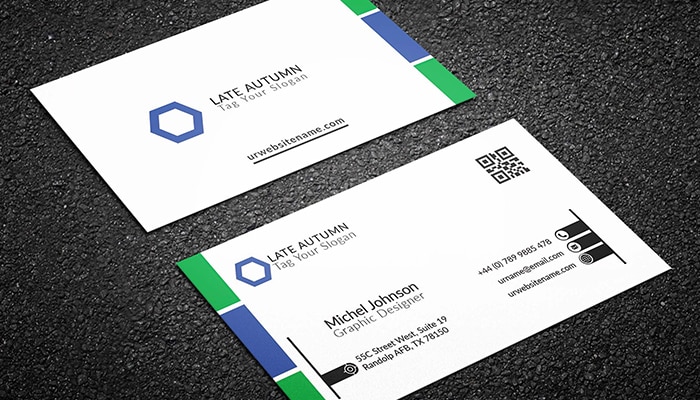
With a business card, design is everything. If you want to make a statement, you have to design a visually pleasing and highly intuitive look that moves people to action. Here are a few helpful pointers:
Choose a Quality Card
Most business cards are cheap and flimsy. If you keep them in your pocket, wallet, or purse for more than a couple of days, they crease, tear, and fray at the edges. Not the kind of image you want to convey! But for a small increase in price, you can choose higher quality cardstock that looks and feels better.
For a major statement, go with something like 32pt card stock, which is thicker than a credit card. As soon as someone picks it up, they can feel the difference. It positions you as a premium brand in a sea of lower-quality alternatives.
Keep Things Simple
The biggest mistake people make with business cards is trying to cram too much information into a small space. They think they’re doing themselves a favor by providing as much value for the recipient as possible, but they’re actually minimizing their message.
While there’s nothing wrong with listing off a handful of services you offer, try condensing your messaging down into a simple and clean message. If you can say it in a single word or sentence, there’s no point in using two or three.
Use a Clean Color Scheme
A business card is practical and informative, but it’s also an aesthetic representation of your brand. Choose a clean color scheme that communicates the right message about your brand. Study up on color psychology and look for colors that stoke the right emotions and put people in a place where they’re willing to move.
Don’t Overwhelm Your Audience
Why do you carry a business card? In other words, what is your number one goal or objective? For most people, the answer to both of these questions is simple: To earn business.
If that’s your goal, you really don’t need much information. Your name, contact information, and a simple word or statement about what you do will suffice. Avoid overwhelming people and they’ll be more likely to respond in a positive manner.
Putting it All Together
A business card is just one piece of the larger networking equation – but it’s an integral piece. Even in today’s digital age, having a well-designed business card can mean the difference between prospects overlooking you and actually taking you seriously.
Take the time to design a compelling card that represents your personal brand and see what happens!

 Brittany Maslo